

Anchors away!
The fourth installment of "The Cause"

In this 250th year of the United States, I have begun a series called “The Cause.” “The Cause” was the initial name of the war for the independence of the United States.
Here are the first, second and third installments.
Below is the fourth one.
The oldest ship of the United States Navy is a 44-gun United States Class heavy frigate, personally named by George Washington.
Her story explains what was once important in America, what was forgotten, and why we stand on the edge of profound loss as a nation. Aspirations became the foundations of the American civilization as they turned from concepts into living institutions that ultimately failed, after a long stretch of success and achievement.
The failure of specific institutions has eroded the final barriers that guard liberty in America. The combination of anger, lassitude, social media, conflict media and general ignorance has created the necessary conditions for power to be displaced and stripped away from one group and given to another. Like the timbers of an old ship rotted away, the strong beams that sustained Americanism and this liberty have hollowed out. We have forgotten the achievements of our ancestors by disrespecting them with our present desecrations. An old ship reminds of something elemental.
She was designed by an American genius from Philadelphia, and built by New Englanders in a Boston shipyard. Her bow has sliced through all of the Earth’s oceans, across four centuries of time.
American merchant ships and their crews were being preyed upon by the British and French Navies and looted by barbary pirates. The young republic was dependent on trade and commerce. The third Congress appropriated money for the construction of six warships under the Naval Act of 1794 to protect American shipping.
The construction of the ships was spread between six states and cities. Local economies boomed around the building of the most technologically advanced machines ever constructed on the North American continent. They were the spacecraft of their age, marvels of science, engineering and design. Though bigger than French and British frigates, they were smaller than the Capital ships of the great European naval powers. They were fast, and their speed made them lethal under the command and crews of the born sailors, who shaped the young United States and her Navy.
United States Ship is abbreviated as USS, and precedes the name of an American warship. What would be the names of the six ships? It is an interesting question to ponder. Surely, the naming of these first American warships would have been imbued with meaning in 1794. We know it was not a trivial decision, and that it was made at the highest levels of government. The Secretary of the Navy submitted a list of 10 names for consideration to President George Washington.
His office was as new as the country. Since there was no precedent, the founding generation was forced to make it up as they went along. John Adams had proposed a style of adornment and address for the office that would have embarrassed a European aristocrat. Washington rejected the flowery titles in favor of “Mr. President.”
The naming of the ships was a presidential decision, and they offer a window into what was viewed as important, significant and meaningful in a young country not yet powerful or secure.
The first ship was named the USS United States.
One was named the USS Chesapeake, after the great bay near Washington’s beloved Mount Vernon on the banks of the Potomac River.
Another, the USS Constellation, signified the constellation of stars on the blue corner field of the new red and white striped flag of the United States.
One was named USS President. There was only one president in the 1790s. He was the only elected head of state in the world, and his name was Washington. King George III was curious about what a “president” would become, and what Washington would do. He was astounded when he was told that his rival would transfer power voluntarily and return to Mount Vernon. The King said that if that were true then Washington would be the greatest man of his or any age.
There have been 45 American presidents. Grover Cleveland counts for two, as does Donald Trump. There have been great ones and bad ones. Honest ones and crooked ones. There have been successful ones and incompetent ones. There has only ever been one that has sought to break his promise and hold power against the will of the people. There are many names for such a person. American president has never been one of them.
Another was named USS Congress. The Congress was a co-equal branch of government that stood equally with the Article II and Article III branches of government created by the Constitution of the United States that imperfectly imagined a new nation with a new system of government into existence. The Congress was comprised of the elected representatives of the American people. It was unique in all the world.
There have been 119 Congresses. They have been filled with American people from our greatest thinkers, leaders, statemen and women to our most sublime fools, imbeciles, crooks, cons, racists, ne’er-do-wells, seditionists and criminals. In the end, the United States Congress and the great Capitol Dome under which it meets is an extraordinary living achievement, a symbol of democracy and a raging hot mess.
The sixth ship is the USS Constitution. The USS Constitution endures. She survives. She has been fired upon, hit, damaged and fallen into periodic disrepair. She was forgotten, but her contribution remembered by the American people when it was retold in verse by Oliver Wendell Holmes in the 1830s. Her hull was lined by Paul Revere, and her masts came from long leaf pine from South Carolina. She was set to be scrapped, but was saved by contributions from America’s school children in the 1920s.
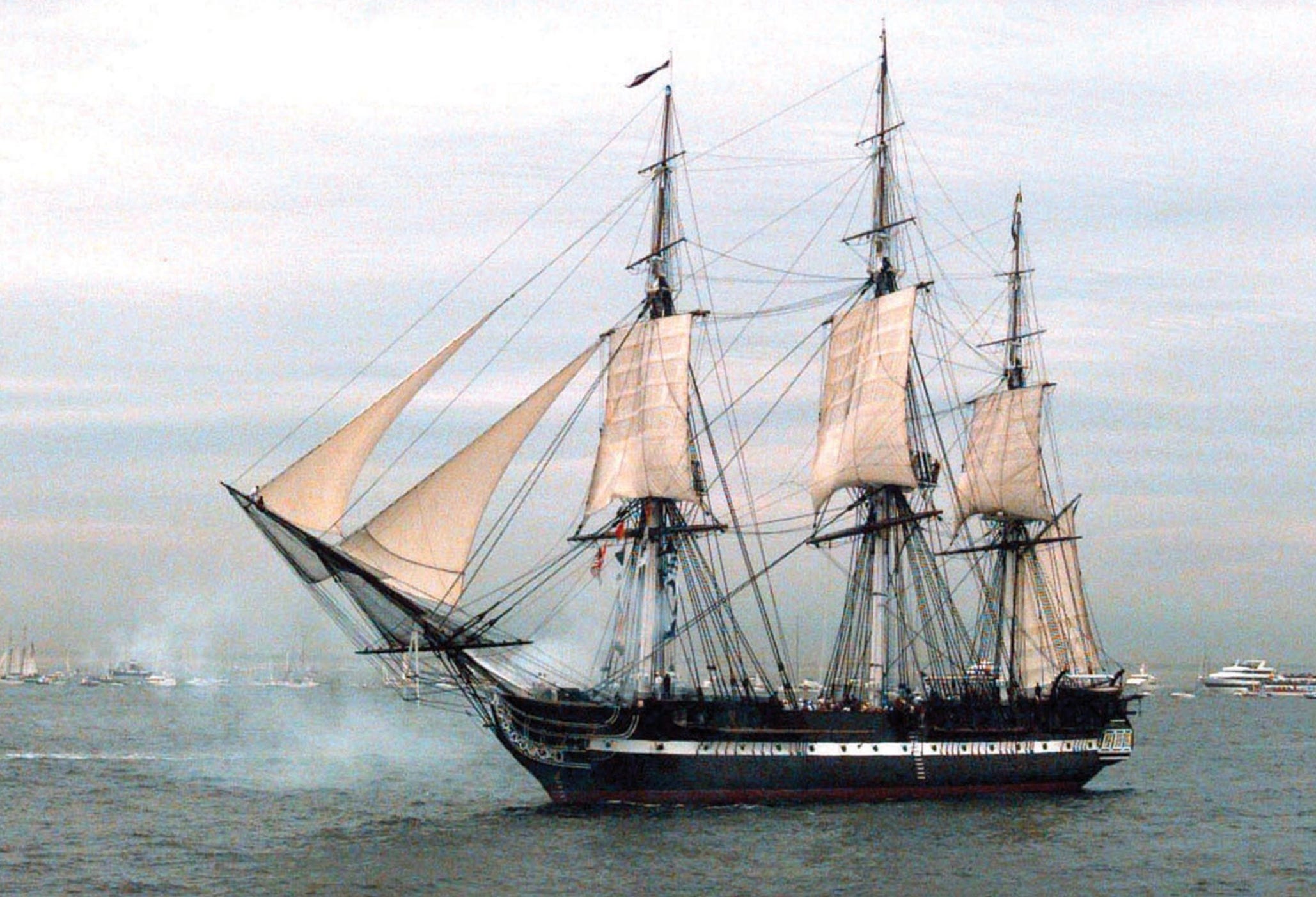
Today, she sits in a quiet corner of Boston Harbor. She is the oldest floating ship in the world and the oldest warship in the US Navy. She remains in active service.
There is a great question at hand in America. Will the USS Constitution outlive the republic that created her. Will the institutions honored at the beginning of America be the most responsible for her collapse after 250 years?
Thank you for the crash course in our history this morning, excellent. Happy Easter day to you and your readers, Steve, and will reStack ASAP 🙏
My father, once told me when I was young, history is a great lesson. I thought it was boring and received an average grade. I asked him why do I have to know this information when it all has passed. He told me, so we don’t repeat our bad mistakes and we can grow to be a better person. After that conversation, I was more engaged in my history class and have enjoyed the class. I’m glad you share this history Steve. Obviously, you know much more than I. Thanks, if Americans knew more of their history maybe we wouldn’t be in this situation.