

The little men

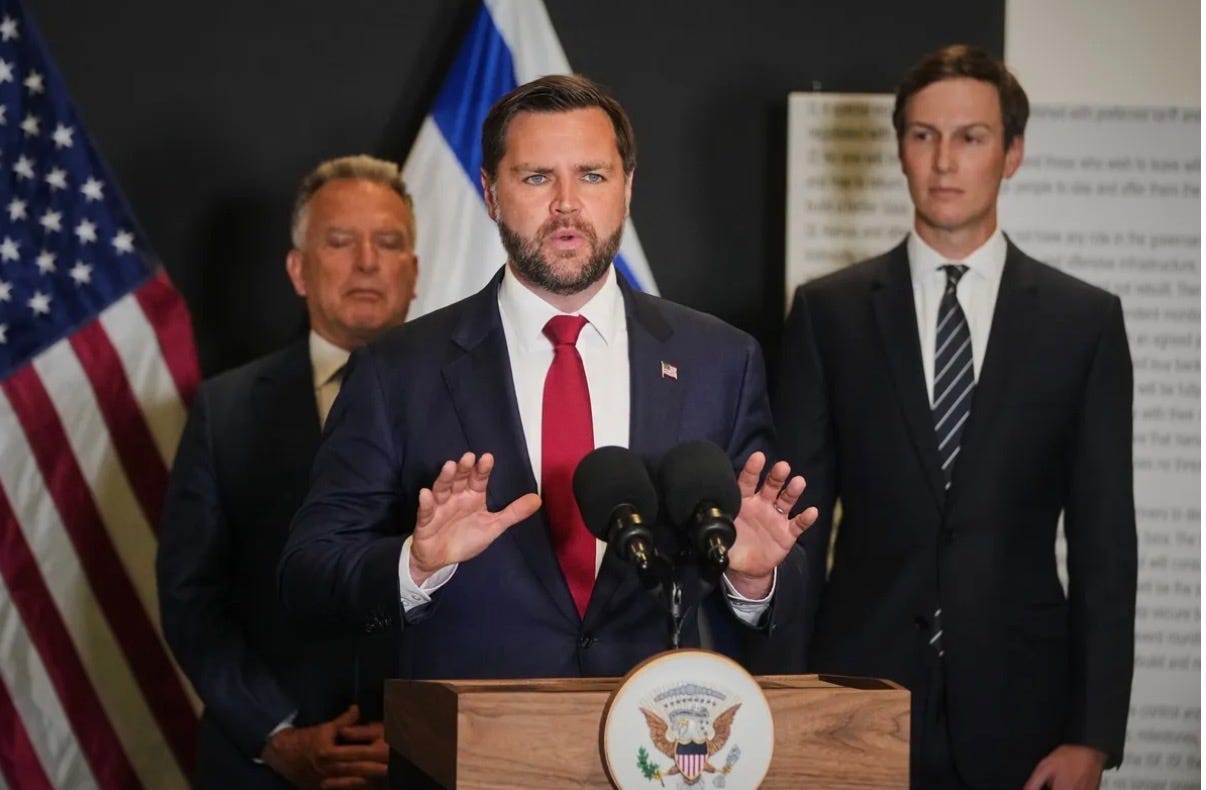
History remembers presidents.
It also remembers the men who stood beside them when great nations diminished themselves.
It remembers the advisers who mistook arrogance for judgment. The loyalists who confused obedience with wisdom. The courtiers who told powerful men what they wanted to hear instead of what they needed to know.
America has produced giants in public service. George Marshall. Dean Acheson. James Baker. Brent Scowcroft. Men who understood that American power isn’t measured simply by bombs, aircraft carriers or divisions of soldiers. It’s measured by credibility, alliances, restraint, deterrence and the confidence of friends and adversaries alike.
Whether one agreed with every decision they made is beside the point. They understood the weight of history.
Donald Trump’s national security team has demonstrated something very different.
Steve Witkoff.
Pete Hegseth.
Marco Rubio.
JD Vance.
Jared Kushner, whose influence over Middle East policy has remained profound long after leaving formal office.
History will judge them alongside Donald Trump — not because they exercised independent leadership, but because they chose loyalty over candor, politics over strategy and performance over statecraft.
Throughout this confrontation with Iran, President Trump promised overwhelming victory. He spoke repeatedly about “unconditional surrender.” He projected absolute confidence that American leverage would produce decisive results.
Whatever one thinks of the surrender document, it bears little resemblance to the rhetoric that preceded it.
That contrast isn’t merely political.
It’s strategic.
When a president elevates expectations to absolute victory, any agreement that falls substantially short invites questions about credibility, deterrence and whether America’s adversaries have learned that time and persistence can erode American negotiating positions.
Those aren’t Democratic talking points.
They are questions increasingly being asked by Republicans as well.
Even traditionally supportive conservative editorial voices have expressed concern that the reported framework risks strengthening rather than permanently constraining Iran, while raising questions about what the United States ultimately gained from the confrontation.
A Wall Street Journal editorial rightly asked:
Who’s sure Mr. Trump will have more success 60 days from now, having given up his blockade, oil-sanctions and frozen-funds leverage? Iran will demand more, and if Mr. Trump is as desperate to end the conflict as he’s sounded lately, he could give it.
Republican Senator Bill Cassidy publicly lamented the agreement, saying they represented such a departure from longstanding Republican national security principles that “Reagan is rolling over in his grave.”
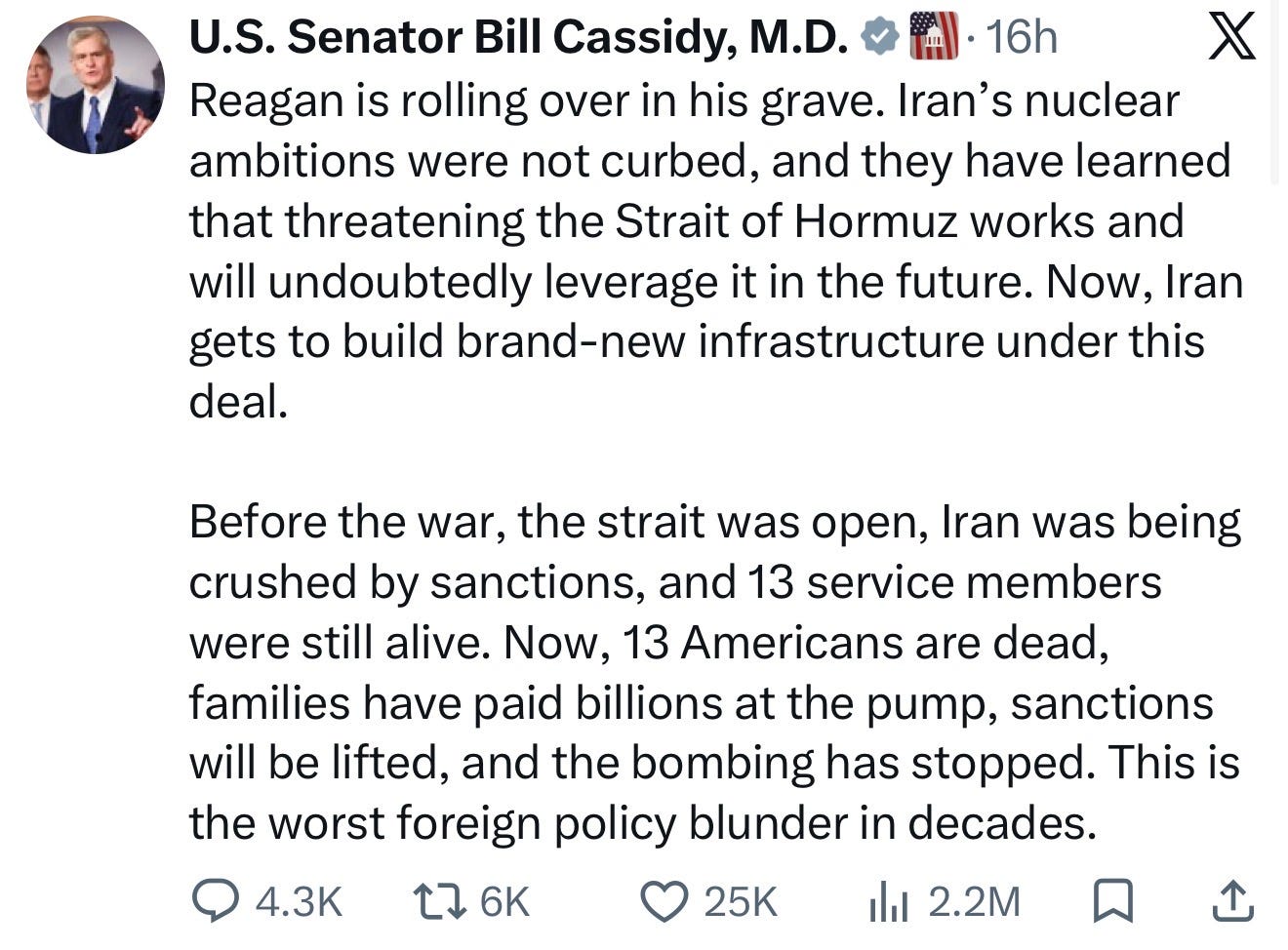
Those are remarkable words.
Not because they came from a political opponent, but because they came from a Republican.
The deeper problem extends beyond one agreement.
It concerns the quality of leadership that produced it.
America once selected national security leaders because they possessed experience forged in war, diplomacy and difficult judgment.
This administration rewards something else — TV appearances, personal loyalty, and absolute deference to one man.
No serious national security team should function as an echo chamber.
Yet disagreement appears increasingly unwelcome. Competence becomes secondary.
The result is an administration whose confidence consistently exceeds its preparation.
Power projected.
Power tested.
Power negotiated.
History is filled with governments that mistook theatrical confidence for strategic advantage.
The consequences rarely arrive immediately. They accumulate.
Adversaries observe. Allies adjust. Future crises become more dangerous.
The greatest cost of any international confrontation is often not the agreement that concludes it. It’s what every observer learns from it.
Iran learned something. Russia learned something. China learned something. America’s allies learned something.
Whether those lessons ultimately strengthen or weaken American influence will be measured not in today’s headlines, but in tomorrow’s crises.
The next confrontation in the Middle East — whenever it comes — won’t occur in isolation.
It will unfold in the shadow of the precedents established today.
History will decide whether those precedents enhanced American deterrence — or diminished it.
That judgment won’t belong solely to Donald Trump. It will belong equally to the little men who surrounded him.
They inherited unmatched American military power. They inherited generations of diplomatic credibility. They inherited alliances built through sacrifice and sustained by trust.
History will ask a simple question: did they leave those assets stronger than they found them, or weaker?
Presidents come and go.
Cabinets dissolve.
Television interviews disappear into archives.
But history has a ruthless habit of remembering the moments when nations confused loyalty for competence and spectacle for strategy.
The men who surround Donald Trump want to be remembered as architects of American strength.
History may remember them instead as something far smaller: the little men.
Great article and accurate description. How hard it is to watch America being made weaker and lose its standing as a country by the likes of these little men and big blowhard.
Thank You Steve . The thing is the Republican Senators who are speaking up now are a day late and a dollar short. They deserve a lot of the blame for this debacle because they confirmed his cabinet. Yes some dems did to but for today they own this mess. They put Hegseth Gabbard Rubio in there .. Please not today. These swine will be remembered for helping the disgusting one to bring us down. As soon as one of them knew he was listening to Bebe they should have gone to him and told him if he gets into a war with Iran he will not have the backing of the Senate .Pressure does work with the idiot sometimes . lost in america