

Thank you, Minnesota

There is no greater obligation for an American than loyalty to the Constitution of the United States.
I have sworn an oath to defend the Constitution against all enemies foreign and domestic. I will never betray it.
I would happily die before doing so.
There is no greater transgression than disloyalty to the Union.
None.
The MAGA men and women — no matter how rich or powerful today — will be remembered as infamous figures. The high court of history will deliver a sentence of permanent infamy and ignominy.
There is no crime more despicable than treason, besides pedophilia, rape and murder, which is convenient for MAGA because they have all three covered as seeming requirements for rising to the top.
These are dark days in America. The lies and threats have turned into violence, which was always the destination. Eleven long years of wishful thinking, denialism and delusion have brought us to where we stand today.
Some people responded to the gathering storm with willful blindness and many of them are the first to make declarations of hopelessness. They shout their despair from the rooftops, with the flop sweat of fear oozing off of them.
It is unseemly, to say the least.
Thomas Paine understood the nature of panic.
The number one piece of advice I have offered during my consulting career was this: most people who drown die because of panic, not because they couldn’t swim.
Yet panics, in some cases, have their uses; they produce as much good as hurt. Their duration is always short; the mind soon grows through them, and acquires a firmer habit than before.
The United States of America came within a few minutes of dying at the Battle of Gettysburg.
In fact, America came within seconds of being destroyed.
During those decisive moments a unit of the United States Army saved the republic.
The saviors of the Union were from Minnesota.
Had they failed, the United States would have been destroyed. A slave autocracy would have been established on North American soil and no American should ever doubt what side the Confederate States of America would have taken when Adolf Hitler rose in the 1930s.
Below is a true story about the men who saved America during a spasm of violence that played out over five short minutes.
It is a Minnesota story.
It is an American story that must be told, as Minnesota faces the evil that it saved the nation from long ago.
The ICE agents in Minneapolis are the lineal descendants of the masked agents who rounded up escaped slaves and free blacks as they marauded across Pennsylvania behind the Confederate army, as antecedents of the Einsatzgruppen and Waffen-SS that would do the same across Europe in the 20th century.
If I had a wish, it would be for all Americans to know this story as a new evil has manifested that seeks to destroy the Republic.
Winfield Scott Hancock of Pennsylvania was debonair, polished and brave.
He was a West Point graduate and a career soldier when the civil war began.
He was married to Almyra Hancock, and right before the Union sundered, Allie, as she was called by friends, hosted a party that was recalled as a poignant farewell by many of the attendees who would remember it for the rest of their lives. The attendees would soon be engaged in the bloodiest war in American history, old friends with their swords raised against one another as rivers of blood washed over the United States.
The farewell took place in California. Everyone who was there that night thought it would be a short war.
Everyone made promises to one another about maintaining their deep friendships that could not last because there are some things more important than friendship.
Patriotism and loyalty are two such things.
One of the guests was an army officer from Virginia named Lewis Armistead who had been a close friend of Hancock’s for 17 years. They were each other’s best men.
Armistead’s life was filled with suffering, and Hancock helped him endure the unendurable through the deaths of multiple spouses, children and other tragedies that plagued the Virginian. They were as close as any men could be.
Six of the men who raised glasses that night to their families and friendships and sang songs around the piano toasting good times and old memories would be killed by US Army forces under the command of the evening’s host Major General Hancock.
They would die at a place called Gettysburg.
Lewis Armistead would be among them.
Dan Sickles was by most accounts, a buffoon.
He was also a pioneer. He was a New York City Congressman who was immune to scandal.
For instance, he was censured by the New York legislature for bringing a prostitute into the legislative chambers that he knocked up and took to England, where he introduced her to Queen Victoria.
The voters did not care.
He shot another mistress’ husband in the head in Lafayette Square, and became the first criminal defendant in American history to get off with an insanity defense.
The voters were untroubled.
Much time has passed since Sickles got away with killing the son of Francis Scott Key, the author of the “Star Spangled Banner.”
Across the decades sensibilities have changed.
1859 America wasn’t particularly upset with Sickles for killing someone, but they were outraged when he got back together with his wife after the trial.
If the presence of a single prostitute could produce such ire in 1859, imagine the astonishment of those people if they could only see today’s MAGA party of Congressional whores.
At any rate, the incompetent Sickles was among a legion of political generals who were put in command of army divisions, despite being completely unfit, ill-prepared and inexperienced.
It was the 19th century version of giving Jared Kushner a diplomatic portfolio, or making Pete Hegseth secretary of defense.
Though stupid and inept, Sickles, unlike Kushner, was no coward. Though a blowhard, his missing leg would say something about his willingness to fight from the front.
On July 2, 1863, the second day of the battle, the Major General Sickles was in command of a division that was out of position and created a gigantic opening for the Confederate Army to attack.
The Confederate Army surged forward understanding the full weight of the mistake and sensing victory was at hand.
Thousands of Confederates were aiming and running towards an opening that would place them on the high ground.
It would mean the battle — and likely the war — would be over.
It would mean that there was nothing between Washington, DC, the White House, US Capitol and all of the US government and the Confederate army.
The person who saw it all unfolding in real time was Hancock.
It was the most urgent moment of his life.
It was the most decisive moment in American history.
Hancock, the Democratic presidential nominee of 1880, galloped at full speed towards the end of the Union line.
He gave no speeches or inspiration.
He asked a single question, and gave a single command before he ordered a suicide charge to save the United States.
“What unit is this?” roared Hancock.
“The 1st Minnesota.”( Bold)
“Fix bayonets. Attack that line,” Hancock commanded.
They did.
The 1st Minnesota was the very first state regiment that volunteered for the Union cause after Fort Sumpter.
It was battle hardened, and it surged forward.
Their descendants are these patriots:
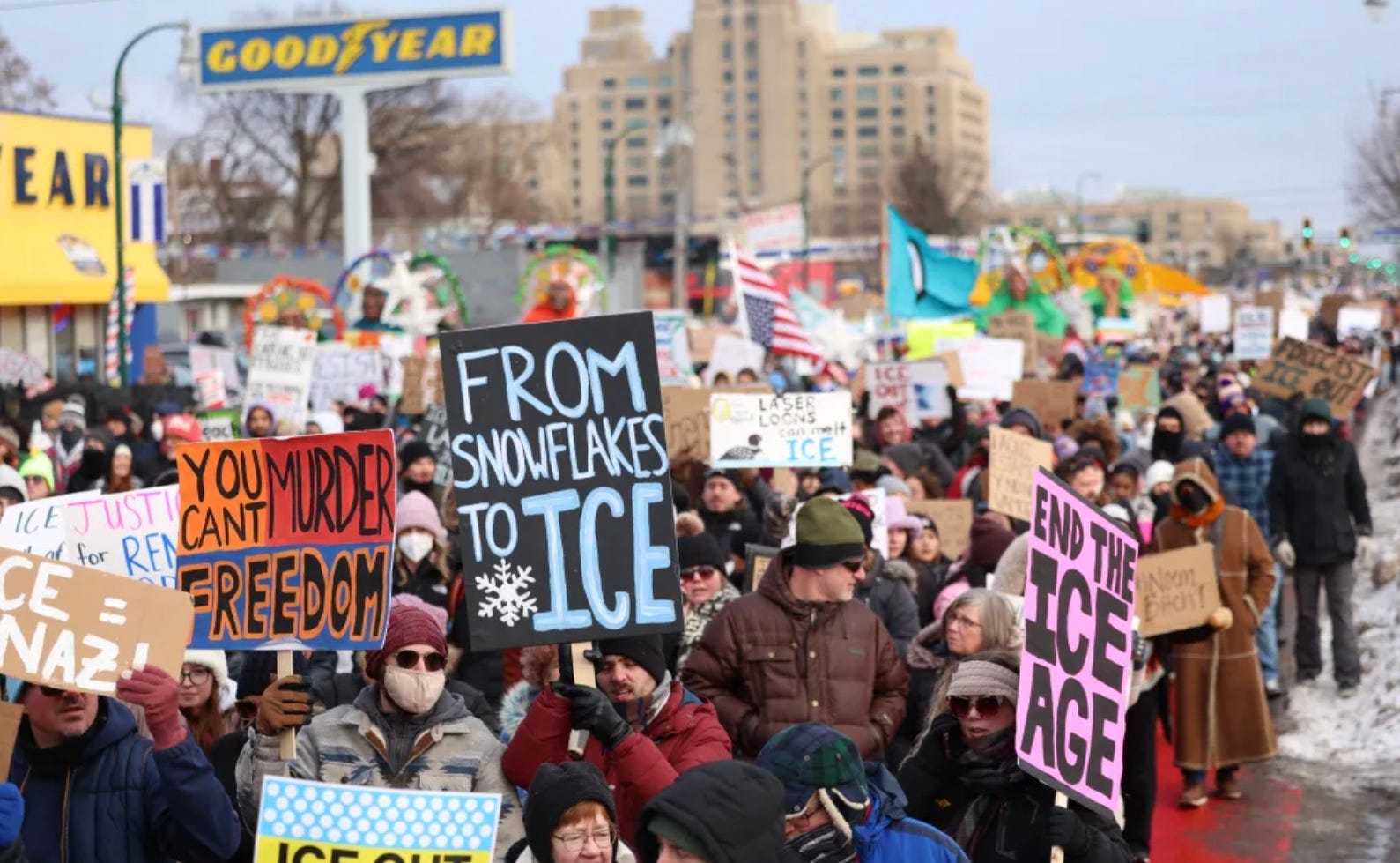
Two-hundred and fifty men attacked 1,250. They were outnumbered 5 to 1.
They fought hand-to-hand in a spasm of violence that resulted in the greatest percentage — 82 per cen — of unit casualties in the history of the United States Armed Forces, a record that stands today.
Hancock was awed by what he witnessed.
He later said that he would have ordered the death of every man if necessary to buy another few moments to reinforce the line.
The stakes were that high.
Life and death.
Think about that.
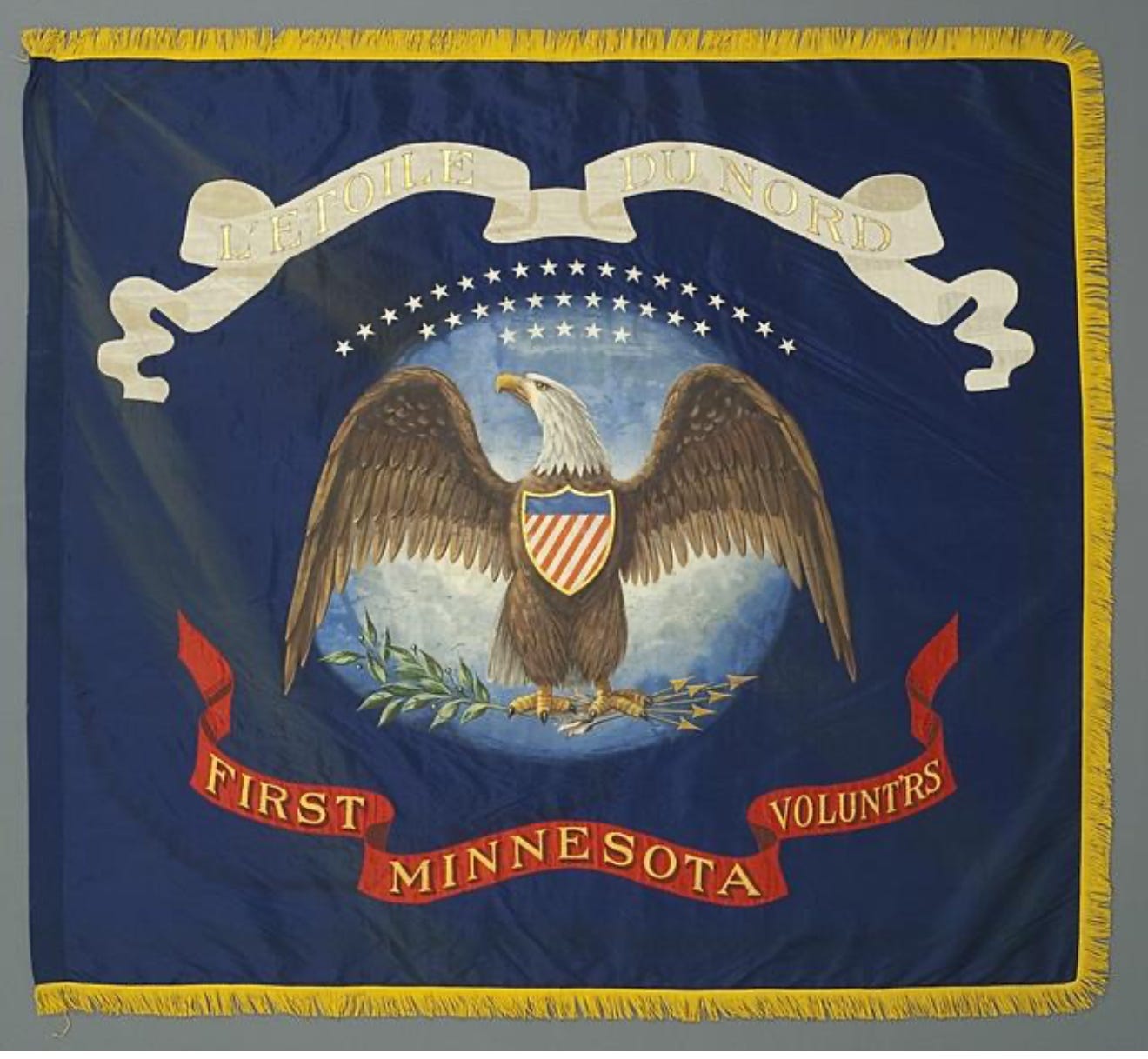
The American flag fell to the ground five times during the battle.
Each time another soldier of the 1st Minnesota picked up that flag, and carried it forward until they were killed.
Five times.
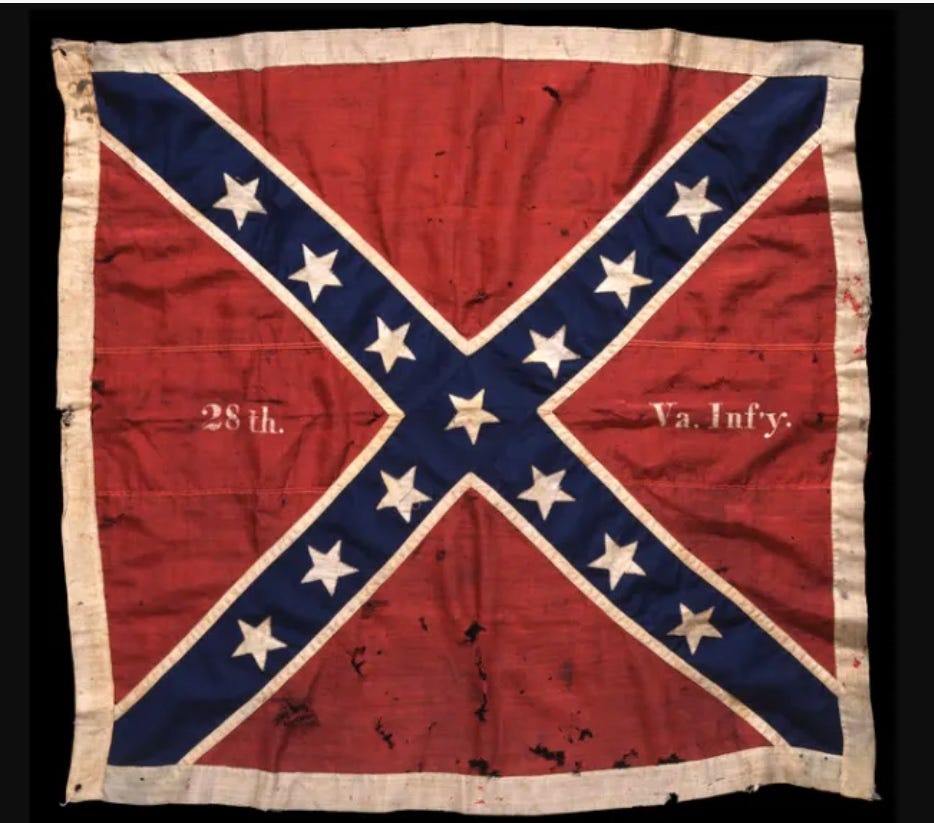
That flag is in the Minnesota State Capitol, along with this other one:
The decimated 1st Minnesota had very few survivors left, but they were not relieved of duty. Instead, they were sent to a new position in the Union line that history would record as the “Bloody Angle.”
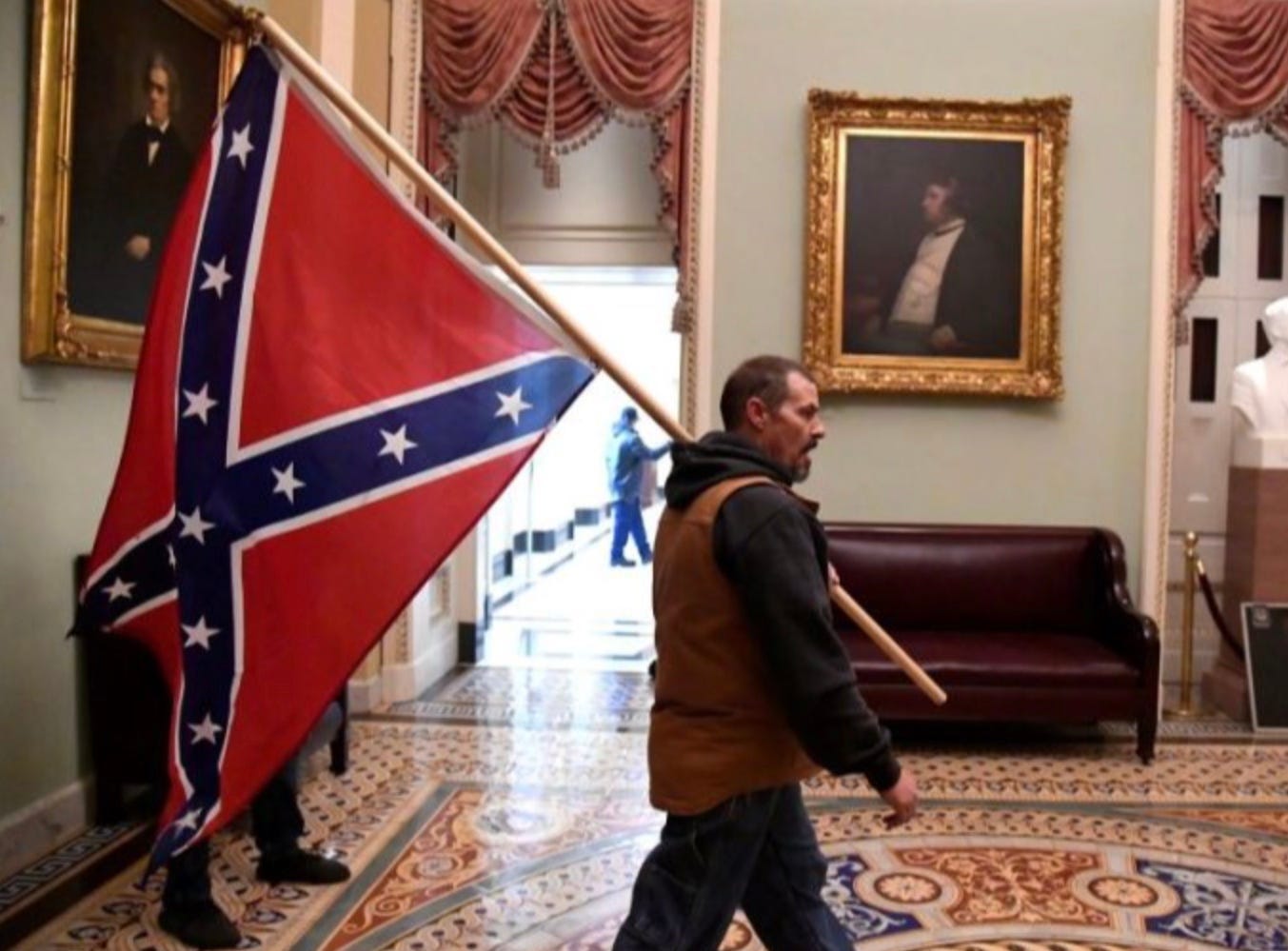
The Bloody Angle held a great distinction in the American story that held true until January 6, 2021.
It represented the high-water mark of the Confederacy until their battle flag finally breached the Capitol on that later day:
It was the place where Brigadier General Lewis Armistead was killed charging the lines commanded by his best friend.
He was shot at the front, mortally wounded, with his hat atop a sword, advancing to his death at the Confederacy’s apogee.
Before he died, he asked that his personal effects and Bible be sent to Allie Hancock. His last words were reported to have been about his best friend, whom he was errantly told was dead.
During that fight, a Confederate battle flag was captured by a Medal of Honor recipient on a Pennsylvania field.
Occasionally, Virginia demands its return.
Minnesota’s answer has always been no.
It will always be no.
There were more than 50,000 American soldier casualties at Gettysburg.
On the afternoon of November 19, 1863, the 16th president of the United States of America rose to deliver a dedication that followed a main address that had lasted two hours. He was an Illinois man, and the first Republican president.
The party was nine years old on that day. It had come into existence to end the compromises around slavery.
Abraham Lincoln spoke 261 words that are the greatest in American history. This short speech reimagined the meaning of America, and set it on a path that endures through this present moment:
Fourscore and seven years ago our fathers brought forth, on this continent, a new nation, conceived in liberty, and dedicated to the proposition that all men are created equal.
Now we are engaged in a great civil war, testing whether that nation, or any nation so conceived, and so dedicated, can long endure.
We are met on a great battle-field of that war. We have come to dedicate a portion of that field, as a final resting-place for those who here gave their lives, that that nation might live.
It is altogether fitting and proper that we should do this.
But, in a larger sense, we cannot dedicate, we cannot consecrate—we cannot hallow—this ground. The brave men, living and dead, who struggled here, have consecrated it far above our poor power to add or detract.
The world will little note, nor long remember what we say here, but it can never forget what they did here.
It is for us the living, rather, to be dedicated here to the unfinished work which they who fought here have thus far so nobly advanced.
It is rather for us to be here dedicated to the great task remaining before us—that from these honored dead we take increased devotion to that cause for which they here gave the last full measure of devotion—that we here highly resolve that these dead shall not have died in vain—that this nation, under God, shall have a new birth of freedom, and that government of the people, by the people, for the people, shall not perish from the earth.
Justice and equality did not bloom from these words.
Yet, they set an unmistakable north star around which great men like Dr. King could navigate towards and align perfectly with, as his dream became manifested in a vision from the proverbial mountaintop in the waning hours of his life.
The Gettysburg Address established meaning in the American cause at its bloodiest place, while fortifying all Americans with purpose, duty and resolve to complete the task at hand. It is here that Lincoln connects all Americans together.
This is where the terms of the great inheritances of liberty from the American Revolution are renewed and expanded.
Here is where an idea around liberty is seeded that will ultimately light the world.
Here is where Lincoln binds the Americans of that time to finish the work of that desperate hour, and connects them to the fallen, and ultimately us, to both of them.
The connection between us extends beyond this moment in time. All Americans are connected together and stand on top of foundations that have been laid at great cost.
The United States is great because it can be made new again by the people who are sovereign and free.
It can be made more just and perfect. It is a place where dreams can be fulfilled and where freedom can flourish, but it will never be a place that is free from the dangers that come from the people who want to take those things away. They have always been present in America.
The fight between the expansion and restriction of liberty has always raged in America.
The side that has embraced freedom is the one that has always won in the end, despite setbacks, hardships and great injustice at the hands of the causes rooted in the malignancy of the spirit of the Confederacy.
Because that has always been so, does not mean it will always be so.
Freedom is fragile.
Many people ask what they can do in this hour during which the forces of extremism and violence are preaching a gospel of discord and disunion.
Perhaps reading the Gettysburg Address at the dinner table might be a remedy to the noise and vituperations that seem ceaseless. It is the greatest address in American history.
When is the last time you read it?
In case you missed it yesterday when I shared it, here is The Save America Movement’s tribute to the people of Minnesota.
The song is “The Battle Cry of Freedom,” and every member of the 1st Minnesota would have known the words.
Today, we must sing again as we march forward. Our cry is “The Battle Cry of Freedom.”
Up with Star. Down with the traitors.
Thank you, Minnesota.
Thank you, Minnesota and thank you, Steve for this moving post. I believe you that we will overcome the regime one day and that the reconstruction of our government and the uniting of our nation will be the next decades' task. I'm in. Let's go.
Thank you, Minnesota.
And then there is Tennessee, which gave us Marsha Blackburn. Blackburn voted against the Violence Against Women Act because it included gay women. She said she did not want the law “diluted” with gay women.
She won with 60 percent of the male and female vote. Stupidity and hatred trumps all in Tennessee. Choose wisely. We can only send 100 people to the Senate.