

Last man standing

The truth can be a lonely place — especially when it carries a price.
Especially when powerful people don’t want it spoken.
Especially when silence is rewarded, and honesty is punished.
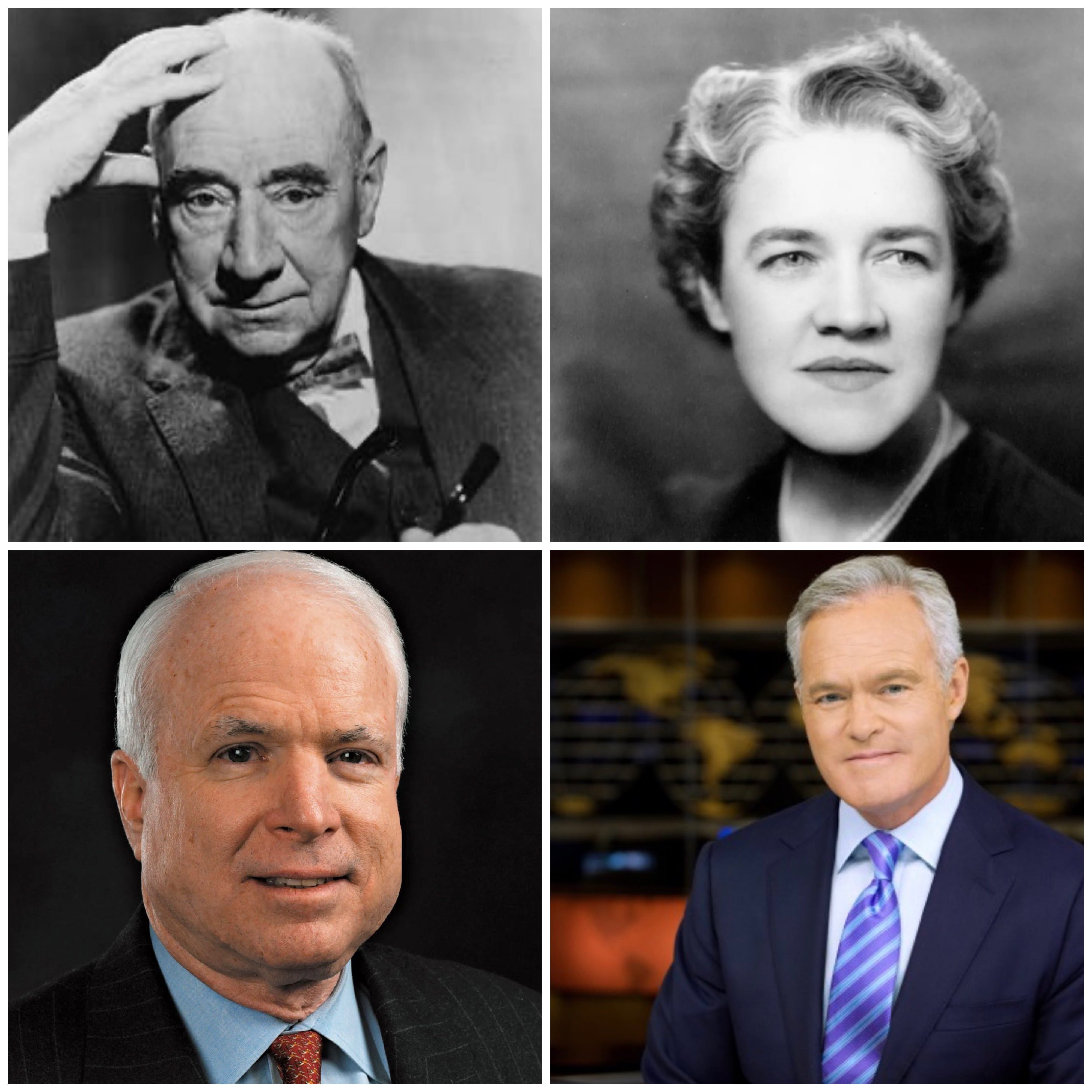
That’s why Scott Pelley matters — not because he worked at “60 Minutes,” lost his job or became the latest chapter in the ongoing degradation of one of America’s most important journalistic institutions.
Scott Pelley matters because he did something that has become increasingly rare in modern America: he spoke plainly.
After his departure, Pelley described what was happening inside CBS in unmistakable terms. He spoke about how “new management instructed [him] to inject falsehoods and bias into a politically sensitive story.” He spoke about being asked to “include assertions that are unverified.” He spoke about bias entering a process that depends upon independence for its credibility and integrity for its purpose.
He didn’t offer euphemisms, or hide behind carefully constructed corporate language.
He didn’t pretend that what was happening was normal.
He told the truth about what he saw.
That act shouldn’t be remarkable in a free society, yet it has become remarkable because so many people in positions of authority have chosen accommodation instead.
Pelley spoke when silence would have been safer.
He chose principle over comfort.
In doing so, he joined a long line of Americans who discovered an uncomfortable reality: the truth can be a lonely place.
America remembers the great speeches, the triumphant moments, and the victories.
What America often forgets is the solitude.
Before the applause comes the silence.
Before vindication comes isolation.
Before history celebrates courage, it usually punishes it.
Joseph Welch understood this. In 1954, much of official Washington had surrendered to fear.
Senator Joseph McCarthy held enormous power. He intimidated opponents. He smeared critics. He ruined careers.
Most people accommodated him. Many feared him. Some admired him. Few challenged him.
Then came the moment:
Have you no sense of decency, sir, at long last?
Today, the question feels inevitable.
At the time, it was dangerous.
History remembers Joseph Welch because he was willing to say publicly what many people knew privately.
That’s the essence of courage.
Margaret Chase Smith understood it.
Her “Declaration of Conscience” wasn’t issued from the safety of a majority.
It emerged from the discomfort of standing nearly alone against a tide of fear and conformity.
John McCain understood it.
When he cast his famous vote against the repeal of the Affordable Care Act, he knew exactly what would follow.
He knew he would be attacked, denounced and would disappoint people who expected obedience.
He did it anyway.
The men and women who crossed the Edmund Pettus Bridge understood it.
The Freedom Riders understood it.
The Americans who challenged segregation understood it.
The Americans who opposed the Vietnam War before it became popular understood it.
The whistleblowers, the dissidents, the reformers, the truth tellers — all of them encountered the same reality.
Courage is lonely.
Cowardice, on the other hand, is social.
Cowardice seeks company.
Cowardice forms committees.
Cowardice drafts talking points.
Cowardice creates elaborate explanations for why surrender is actually prudence.
Cowardice always finds a justification.
Courage usually finds consequences.
That’s why it’s rare.
The defining story of the Trump era is often described as a story about power. It isn’t.
It’s a story about fear.
The fear of losing access.
The fear of losing status.
The fear of losing money.
The fear of losing influence.
The fear of becoming unpopular.
The fear of standing alone.
Look around.
How many executives have surrendered because they feared the consequences of resistance?
How many politicians?
How many media owners?
How many university leaders?
How many elected Republicans abandoned their constitutional obligations because they feared a primary election?
How many institutional leaders abandoned principle because they feared conflict?
The answer is obvious. Far too many.
That’s why Scott Pelley’s firing — and his refusal to remain silent afterward — resonate far beyond journalism.
His story is about character. It’s about the willingness to tell the truth after calculating the cost. It’s about understanding that some things are more important than a title.
There’s an old truth that character is revealed when there’s something to lose — not when there’s applause, safety or comfort.
Character reveals itself when there’s a bill to pay, when there’s a consequence, when there’s a risk.
That’s when the performance ends, and the truth begins.
History has little interest in the people who found reasons to remain silent. History remembers the people who spoke anyway.
There’s a temptation in moments like these to become discouraged. To look at the surrender, cowardice, and accommodation. To conclude that courage has disappeared.
It hasn’t
It never does.
It simply becomes scarce.
It retreats into the hearts of a small number of people who refuse to surrender themselves.
They’re never the majority.
They’re rarely celebrated in the moment.
They often stand alone.
Yet every advance in American history has depended on them — every expansion of liberty, every defense of constitutional government, every victory for justice, every triumph of truth over power.
It always begins with someone willing to endure the loneliness.
Someone willing to stand when others sit.
Someone willing to speak when others remain silent.
Someone willing to pay the price.
That person is often the loneliest man in America — until he isn’t. Until others discover their own courage. Until the silence breaks. Until the truth becomes impossible to ignore.
That’s how fear loses.
That’s how free people remain free.
That’s how republics endure.
Not because courage is common, but because enough people possess it when it matters most.
Often, heroes happen and are quietly celebrated....Scott Pelley is making a difference, though it may seem like a ripple, but it is becoming a tidal wave.
I don't know what I'm going to tell the cops.
Tell them the truth, George. Easiest thing to remember.
--Glengarry Glen Ross