

"Be not afraid"
Warsaw’s Old Town is testament to the human spirit and its genius

Warsaw is a beautiful city. She glistened at sunset. Old Town was filled with people on a perfect spring day.
There were no visible signs — at first glance — of what had happened here. There was no evidence of subjugation and repression, destruction and murder.
What I saw was a 21st century capital, nestled on the banks of the Vistula River.
The perfectly-hued buildings are centuries old, and the cobblestone streets stretch back long before the United States existed. The city is 1,000 years old. Its enormous squares include buildings that date to the 12th century. It was storybook beautiful. A young person would never know that something happened here that requires remembrance.
Why must we remember? After all, it is easier to forget about difficulty and hardship. It does not take long to forget — even in Poland.
Remembrance honors the dead, and enforces wisdom learned from the sacrifices of war. It is a heavy weight to remember, and on the surface, an impossible weight without the capacity to find resolution and forgiveness to even the most grievous wrongs.
Collective guilt, punishment, retribution and revenge are a philosophy that murders the future. They impose a cancer on the spirit, and weigh down the soul. It strangles the optimism necessary for creation, invention, rejuvenation, renewal, purpose and the pursuit of happiness. The lessons of history must be absorbed because they are the guidebook for our survival. They also must always be kept separate from the debate over our destiny. Where we are going is into the unknown of the future. What lies ahead has not yet happened, but it will soon be part of a greater whole that can be connected quite easily to the past. The past rumbles its disapproval with the present sometimes. It must. How else to explain the regathering of vanquished dogmas in new forms with new names? Is it farce, tragedy, destiny?
There are signs outside the beautiful Royal Castle that are a summons to national memory and the achievement of its rebuilding and reconstruction by donations from the Polish people in 1970.
The signs say the rebuilding has reached a jubilee of 50 years, but they also insinuate that there has been a creeping amnesia about a time when the whole nation came together in a rebuke to repression and an assertion of national pride and sovereignty. It was a collective action that was a preface to something that was building, coming, but later. Today, the Polish flag flies over the castle in a position of certainty and preeminence. It seems impossible that it had ever been taken down and made illegal in the homeland of a fighting people.
I thought about trying to explain to a child, or sadly, many of my countrymen and women who are enthralled to a man who has been accused by his former chief of staff, a retired USMC General, of praising the man who razed the castle, what happened here, and why it matters. Why does it matter in the United States? Why does our decision in America matter to people all over the world who are watching, waiting and praying that we do something about the creeping fascism descending over America and freedom everywhere.
People look around, up and down, when they see something new. They tend to not look closely, preferring the impression over the details.
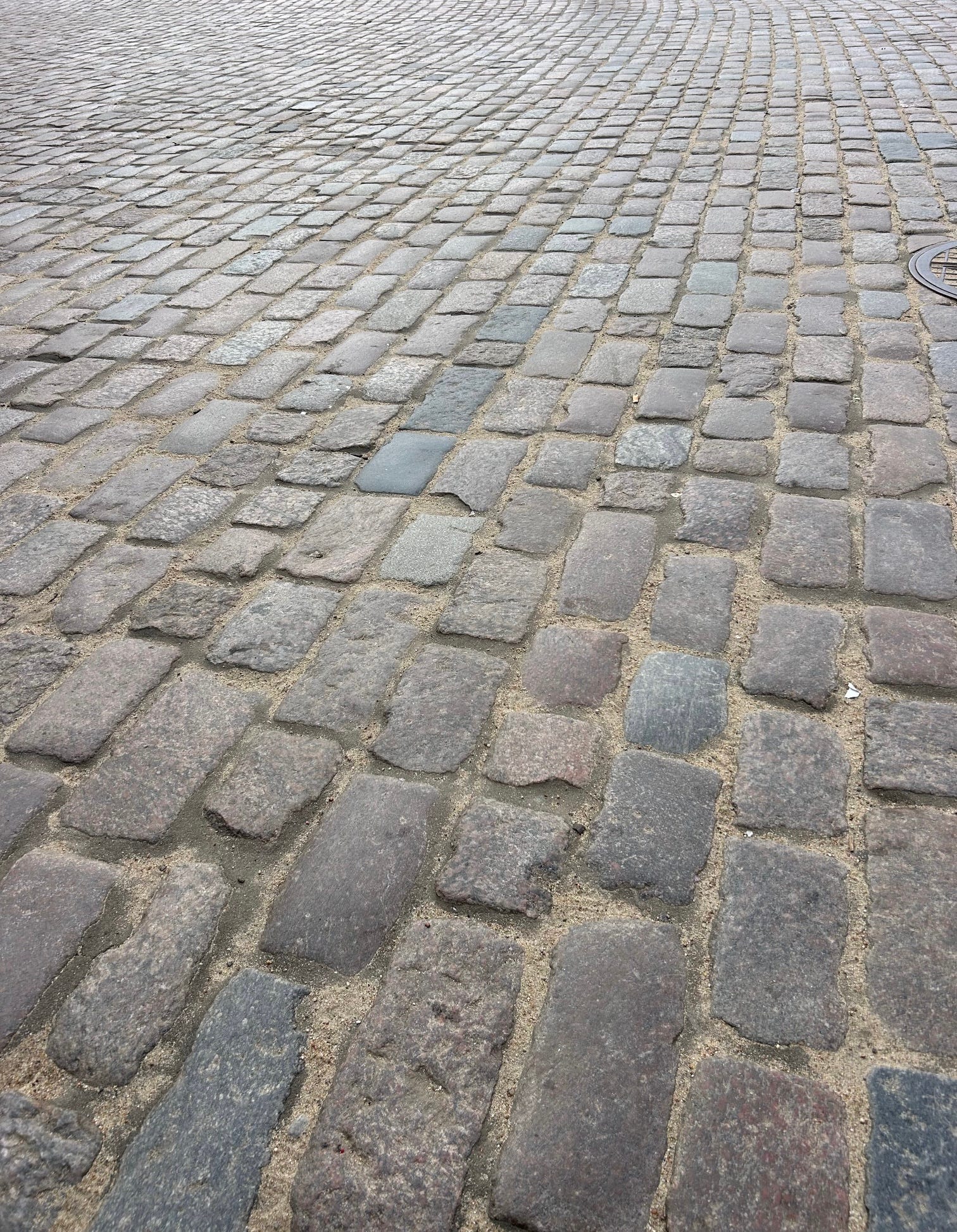
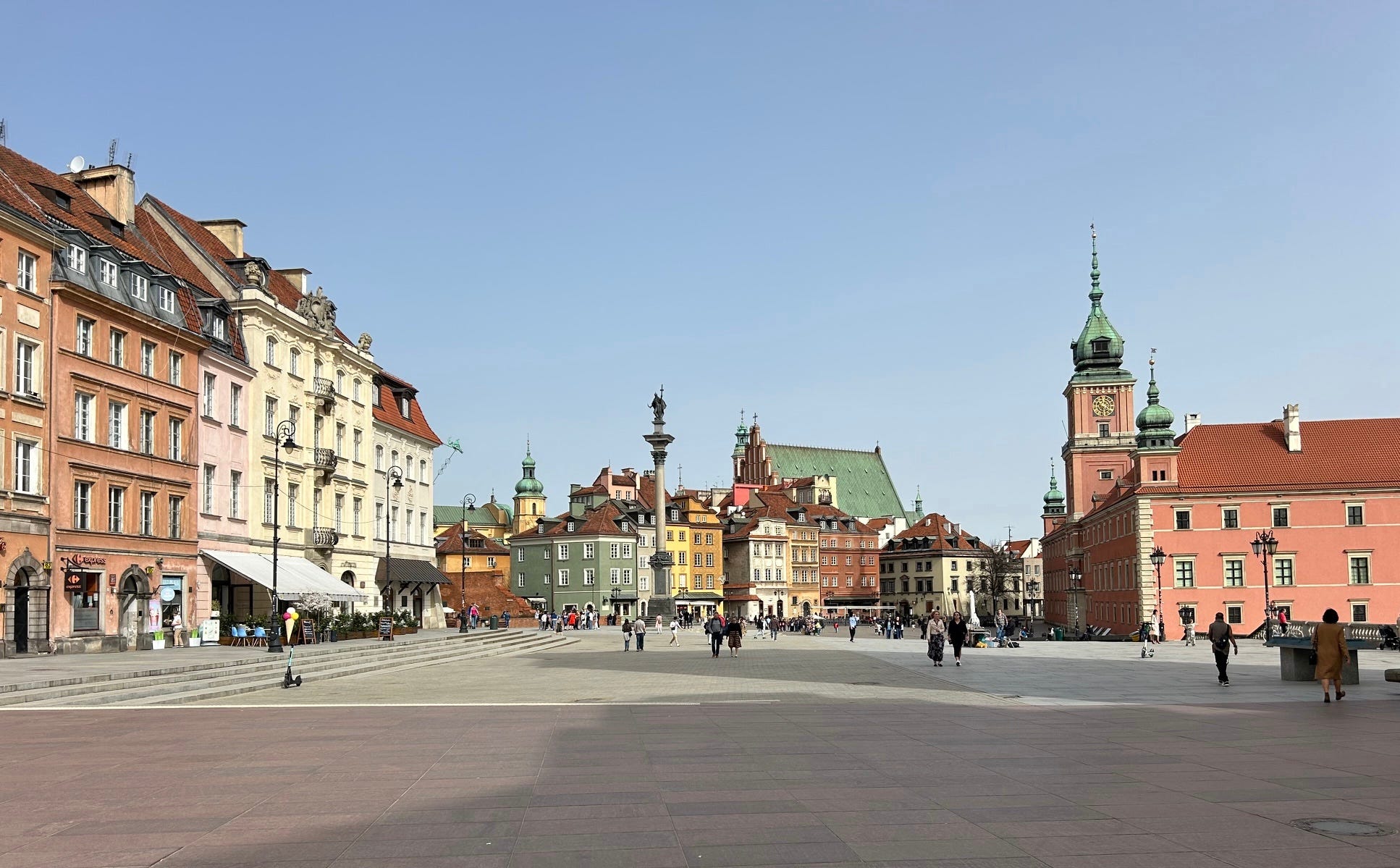
What I would first explain is that everything within site was destroyed. I would explain that it was annihilated, and reduced to dust and rubble. All of it.
The crimes were committed by Nazi Germany. Then, more crimes were committed by the Russians. Sometimes, the Russians and Nazis committed crimes against the Polish, together. Other times, they committed crimes against the Polish people separately when fighting each other. Either way, the subjugation was deadly, immoral and inhumane.
Those signs are everywhere. Modern Poland has not escaped western consumerism. The Hermes store is flanked by the Aston Martin dealership, and a dozen fashion houses have signage hanging within my field of vision. There is McDonald’s and Starbucks, food trucks and balloon vendors.
There are other signs. They are subdued, but when I look, they are everywhere.
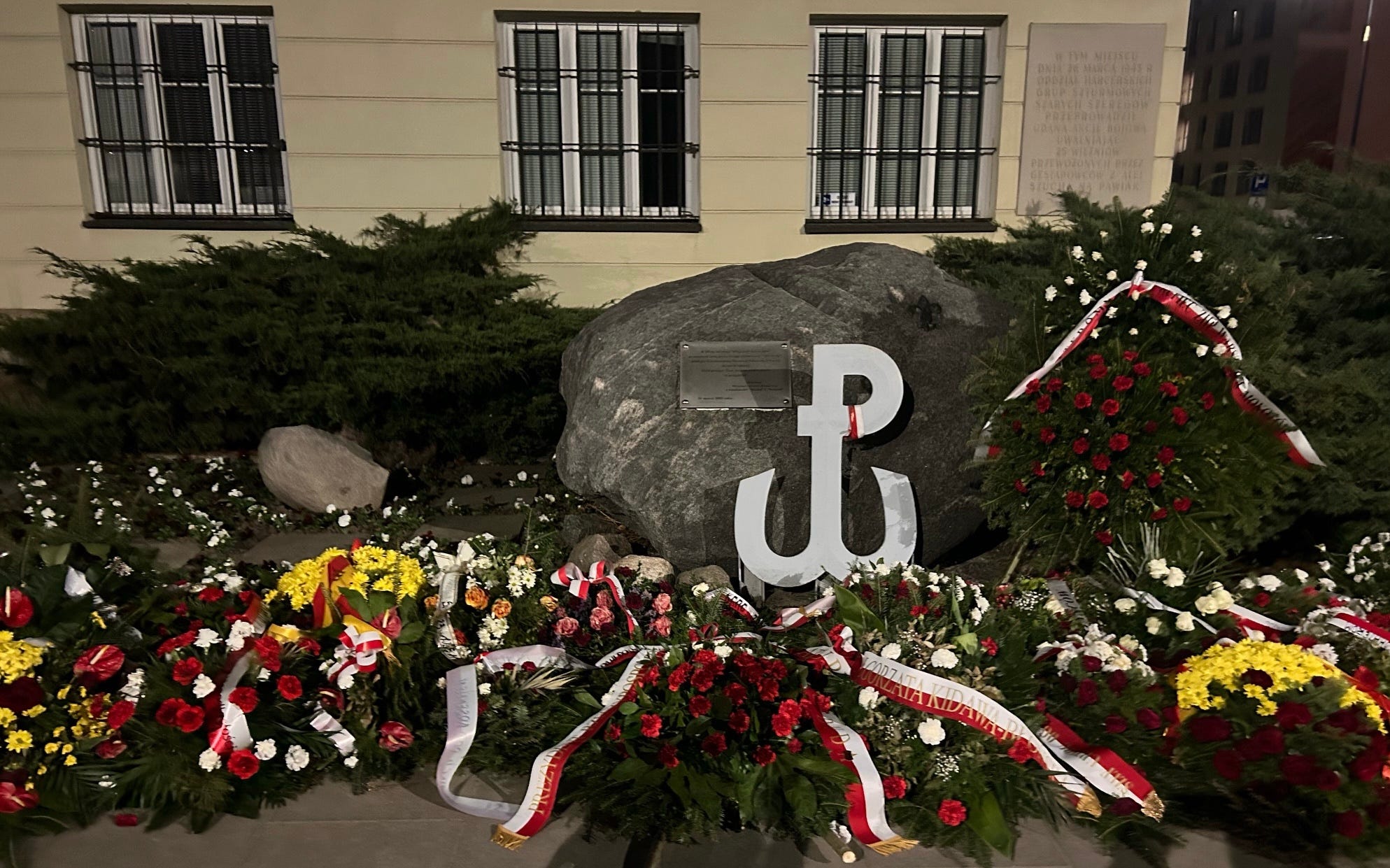
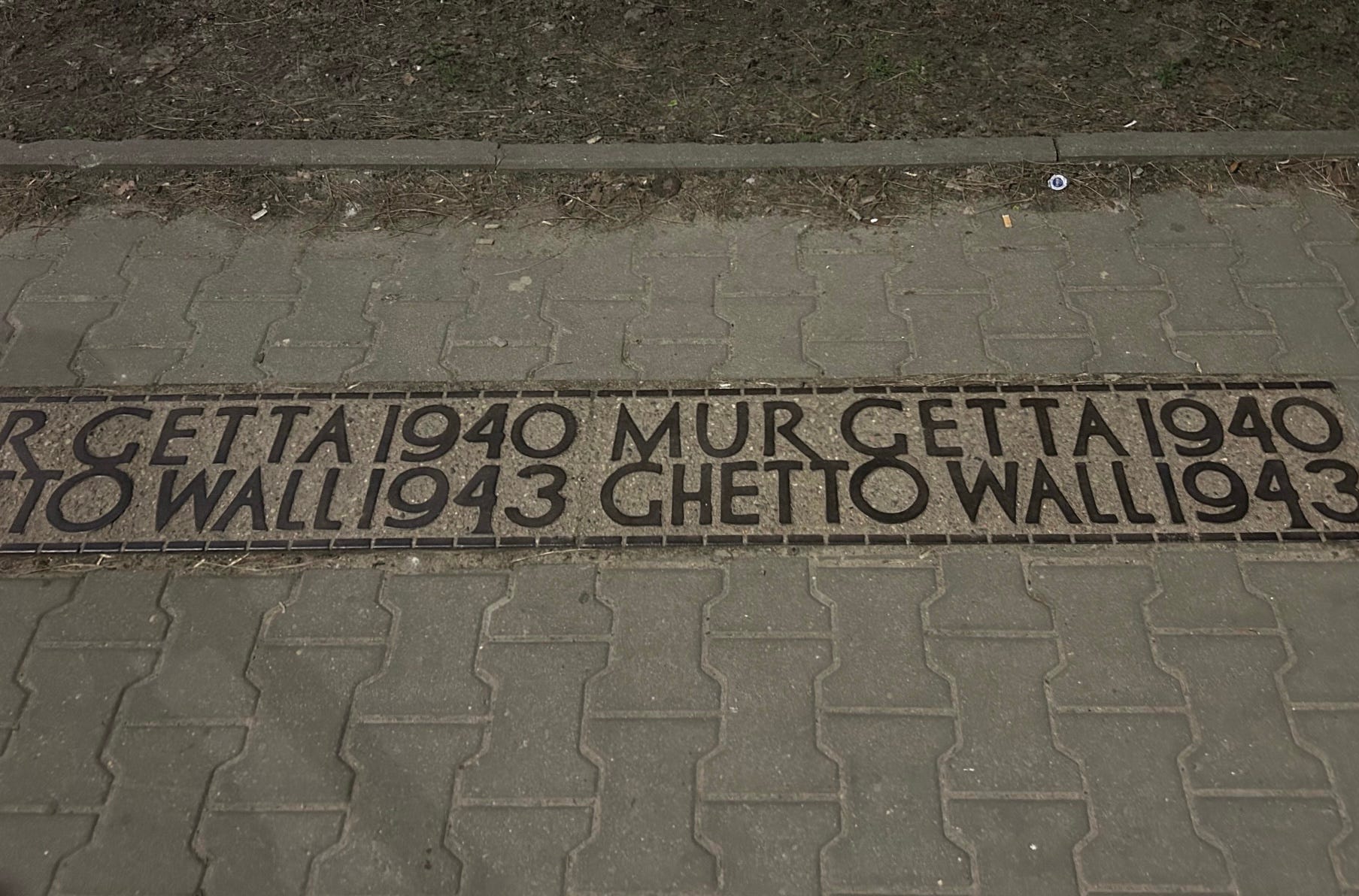
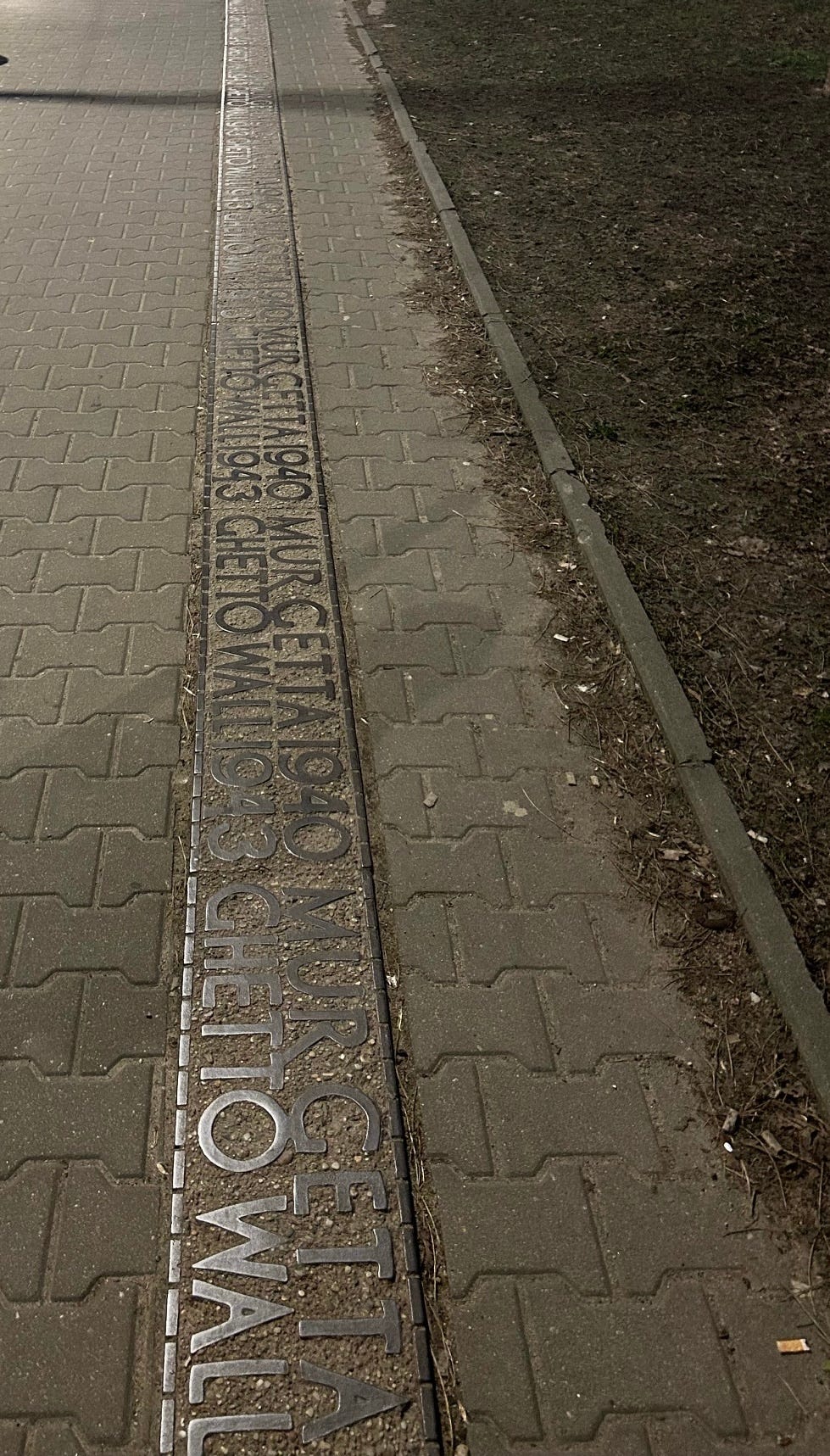
The first and third photos below mark the spots where hundreds of men, women and children were herded against a wall and machine gunned by Nazi troops.
The second photo marks a combat action by the Polish home army against Nazi occupation. The Poles resisted, and fought like no other captured nation. They paid a price. The Nazis destroyed everything. They reduced centuries of human achievement into rubble. They murdered almost all of the Jews.
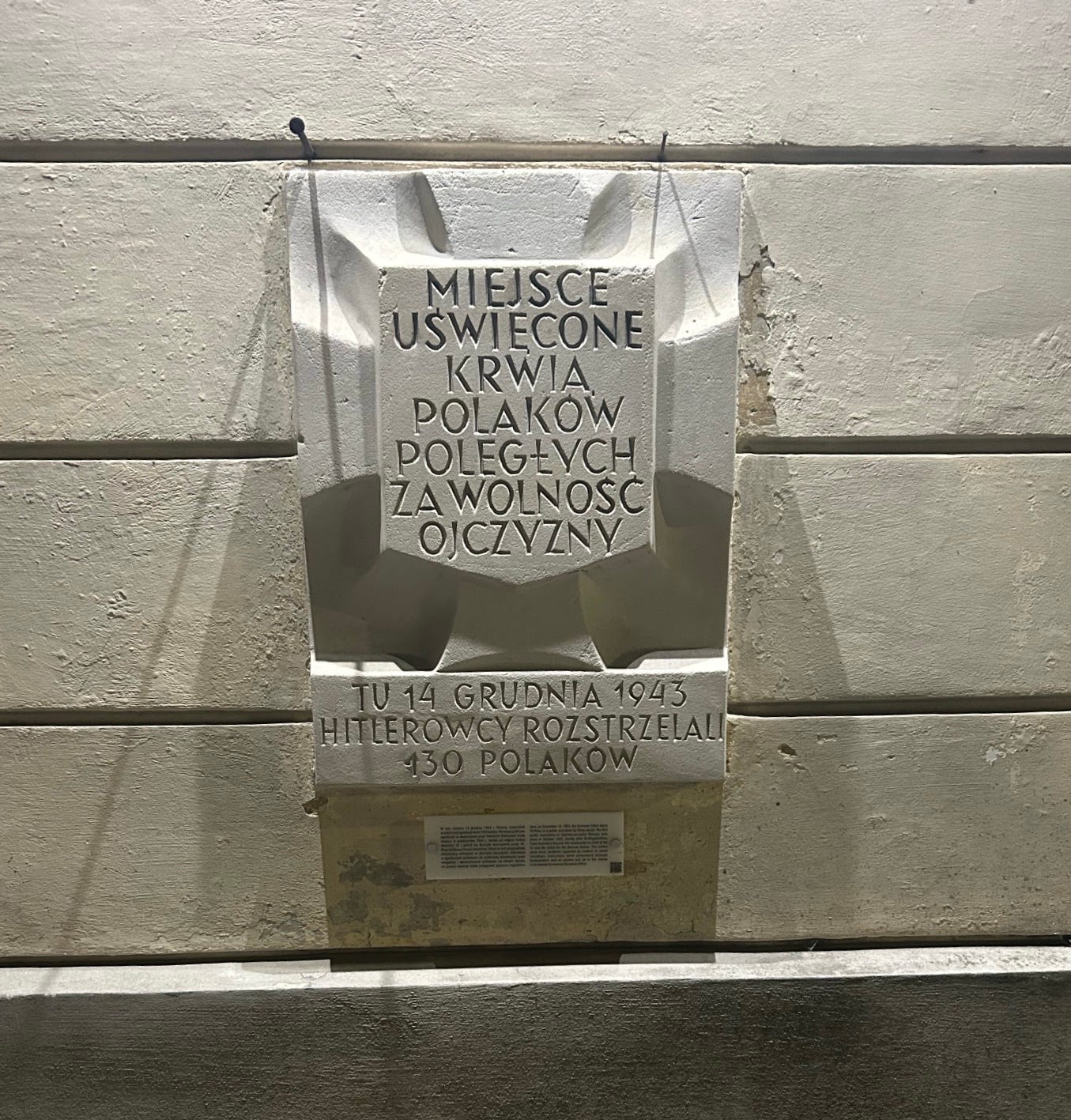
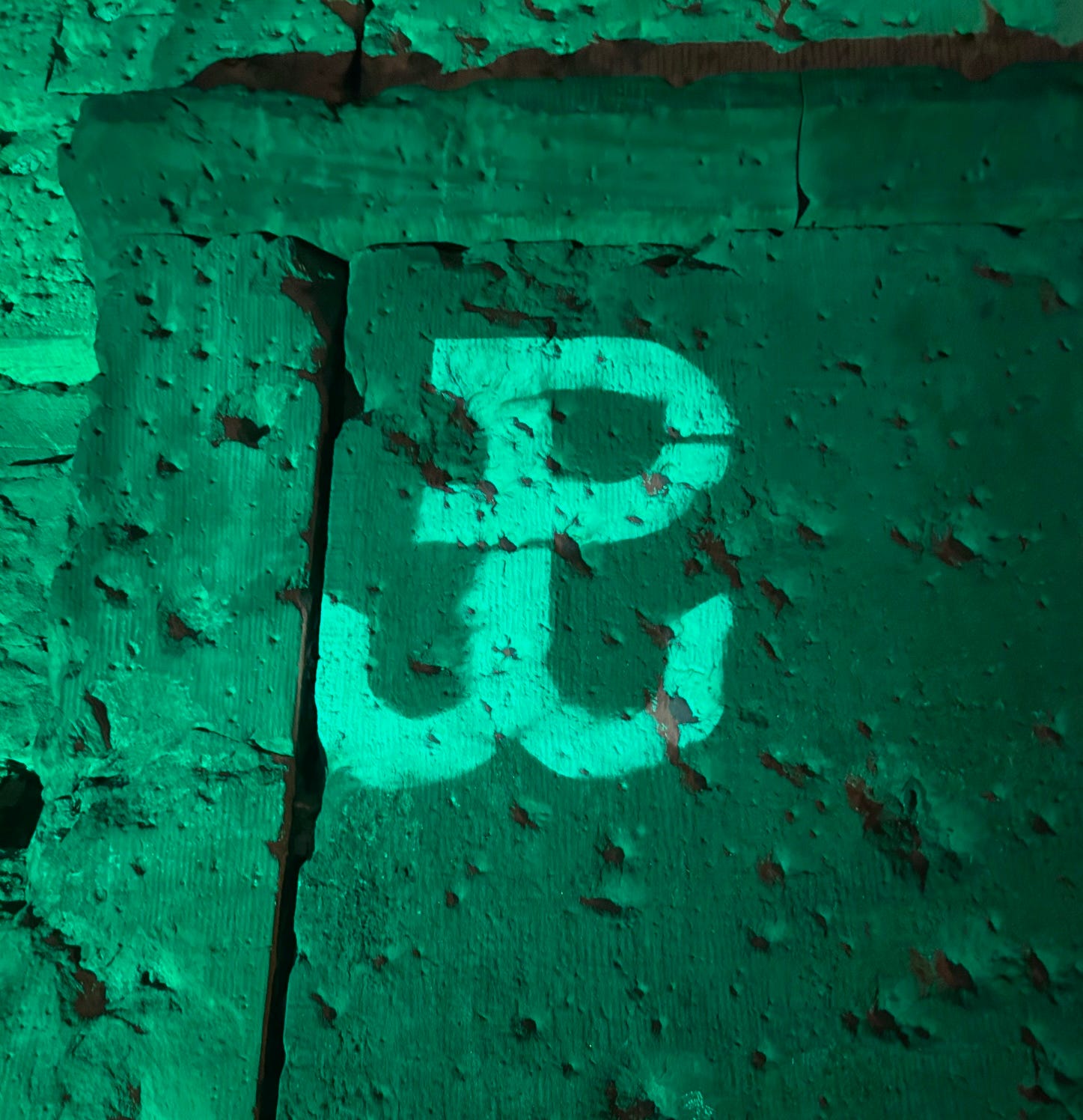
Behind this line below, where the ghetto wall stood, hundreds of thousands of Jews were herded into squalor. They would be shipped to Treblinka and Auschwitz. Few would survive. Centuries were ruined in moments. Unspeakable doesn’t even begin describe it.
Yet, here it is. A city rebuilt. It is a miracle, and appropriately recognized as a great human achievement by holding a UNESCO world heritage site designation. Brick by brick, it was all put back together.
A new city was built on top of the old, but it was not free. The Nazi yoke gave way to a new tyranny that would endure for 45 years.
How was it that tyranny ended in Poland? If the complicated and multifaceted question demanded a singular answer, what would it be? What quality was found? What was remembered?
Let me show you.
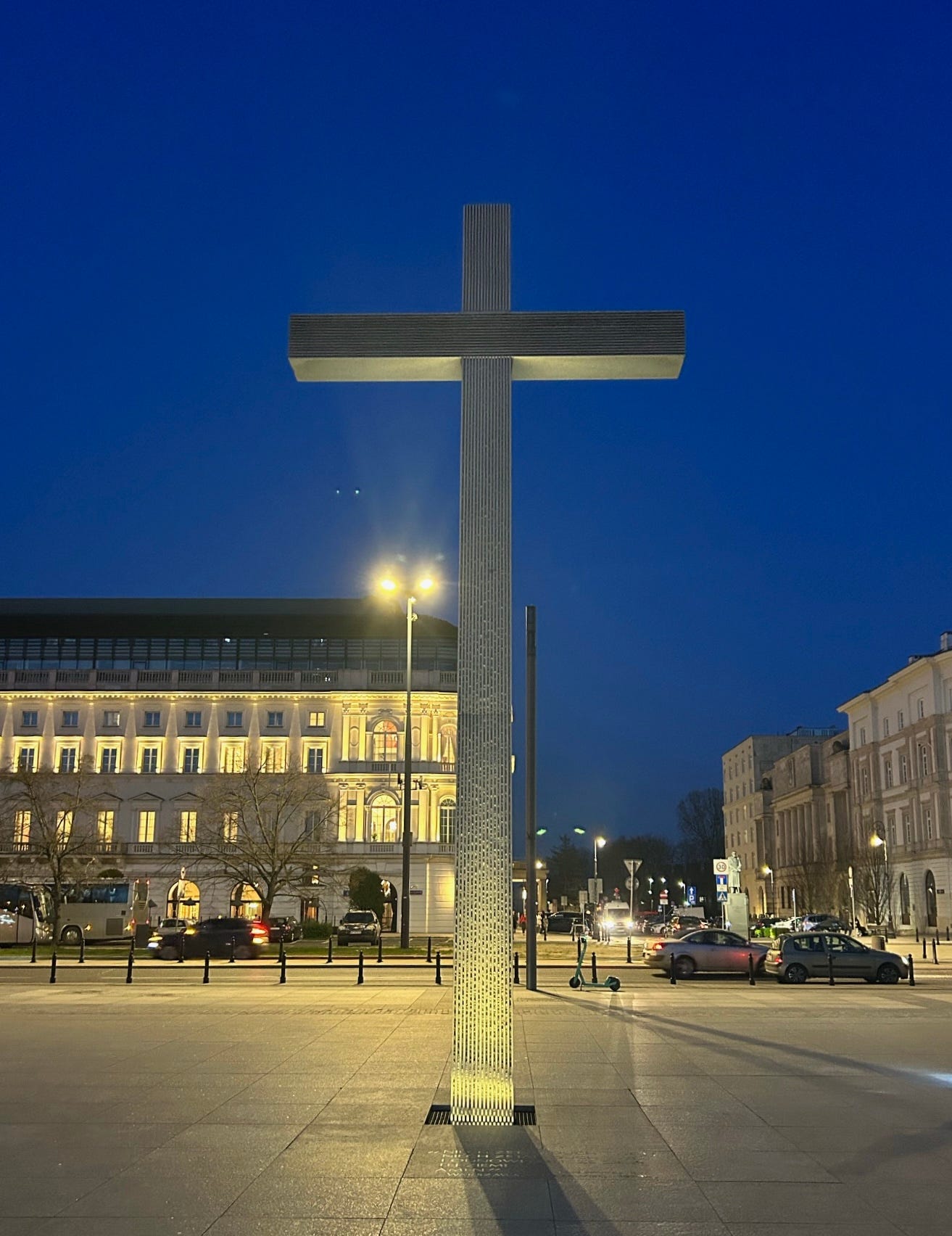
A 59-year-old man returned to his country in June 1979 named Karol Wojtyla. He was movie star-handsome, charismatic, and deeply feared by the forces of dictatorship and oppression. Why did they fear this man of peace? What worried them about the man history would remember as Pope John Paul II?
It was this simple declaration:
Be not afraid.
Let it ring true everywhere this Easter Sunday, where people are yearning for freedom. Let it be heard in every corner of America, and all around the world, where people are united together in shared values of humanity that demand justice, equality, freedom, liberty and a rule of law as a necessity of life.
They were some of the 20th century’s most electrifying words. There is no doubt around their deep moral connection to the words of FDR, a man, who was described by the world’s leaders in the aftermath of the great victory over fascism as an apostle of peace, who said:
The only thing we have to fear is fear itself.
The Poles have a reason to be afraid. They stand on a dangerous frontier. They are menaced by Russian aggression from the east and American abandonment from the west. They are threatened by a loss of faith in freedom from places where its loss has never been known.
Warsaw’s Old Town is testament to the human spirit and its genius. There was a Great War, and the darkness was defeated at a terrible cost that was paid unevenly. No place paid a higher cost, and that was because no place else had an uprising against tyranny like the one in Poland.
I will share the story with you, and introduce you to some new friends along the way.
Today is a beautiful day in Warsaw. It is Easter Sunday, and the weather is Santa Barbara-like. The city square is bustling and beautiful. Everywhere, there are people walking in the footsteps of memory and history. Children are smiling. Some are buying balloons, and others, candy. The beer is starting to pour in the cafés.
I’m going to close my eyes for a second and visualize something.
There are no bells ringing, or trumpets blaring. There is no joy, only fear.
I hear steps. They are heavy and in unison. Those are boots. Jack boots. I see the swastikas and hear German. Those Nazis see no people, only vermin and slaves.
I open my eyes, and it is all gone — like it never was, and never could be. There are no signs anywhere. Unless that is, you know where to look.
Polish Prime Minister Donald Tusk is looking east. He is talking to all of us:

He remembers. He seems to know something. Poland will endure. After the ruin, someday, people will be free.
Someday the cry will be heard, and a calm will descend.
BE NOT AFRAID.
There are 219 days to go in a choice of great consequence for people all over the world that will be made by Americans.
“Be not afraid” seems like a message worth dwelling on this Easter Sunday.
Fear has always been freedom’s foe.
Happy Easter from Warsaw.
How much do most Americans know about WWII and about the post-War Russian oppression of Poland? This, sadly, is part of the problem.
We must never forget. The photos reveal so much, it's both inspiring and disturbing.
Poland has welcomed many Ukrainian refugees and committed other aid as well- clearly, they get it. Our GOP won't do anything because too many are owned by Putin/Trump & Co., it's a sin if not a crime.
Happy Easter everyone, and let's be not afraid too.